Communitas – WUJ
Standing with Ukraine and all those facing erasure
C G Jung famously commented that we do not individuate [self-realise] by sitting in isolation at the top of Mount Everest.
Towards the end of his life (and having lived through two World Wars) Jung wrote:
“Man is his own greatest danger.” Not war, not famine — but psychic epidemics: moments when entire societies lose touch with reality. This is mass psychosis — when fear replaces reason, truth becomes lies, and obedience feels like safe.”
“So much is at stake and so much depends on the psychological constitution of modern man… Is he conscious of the path he is treading, and what the conclusions are that must be drawn from the present world situation and his own psychic situation?…
And finally, does the individual know that he is the makeweight that tips the scales?” (CW10 §586)
In Jungian terms, the experience of communitas offers a deep sense of connection and shared humanity. It is a space of openness, equality, and mutual support where individuals experience collective presence and solidarity that fosters personal growth, and transformation.
WUJ is a project that embraces as the values of communitas as best we can. There has been huge support for our Ukrainian colleagues and others from around the world as they face the full force of Russia’s attempts to erase Ukraine and oppress its people.
Our Ukrainian colleagues refer to the project as a lighthouse in the darkness – but it is not only they who are touched by the experience of communitas. It is everyone who participates and gives of themselves.
You can read more about With Ukrainian Jungians (WUJ) below – and you are very welcome to participate!
With Ukrainian
Jungians (WUJ)
With Ukrainian Jungians (WUJ) is an international ad hoc group of Jungian Analysts, Analytical Psychotherapists, other mental health professionals and friends, who came together at the outbreak of the full-scale invasion of Ukraine by Russia in February 2022. We gathered to stand in solidarity and offer support to our colleagues in Ukraine and to those who are now scattered around the world as refugees.
Since then, others facing erasure have asked to be included and the organisation has continued to develop.
It is supported by many of the world’s most well-known Jungian analysts and academics. All are welcome to participate.
WUJ Upcoming Events
Tuesday 10th February 2026 at 6pm GMT (8pm Kyiv)
WUJ
On 24 February it will be the fourth anniversary of Russia’s full-scale invasion of Ukraine.
How are you? як справи?
Open to all
It will fall as Russia bombards Ukraine’s energy infrastructure, leaving colleagues in temperatures of minus 16 degrees with no power, sometimes for up to 6 days. Some colleagues are also without water – all whilst Russia continues its nightly missile attacks. The suffering is extreme. – and yet, Ukraine does not waiver in its commitment to stand firm against totalitarianism and the occupation and oppression of its country. Military and political analysts agree that Ukraine’s stand against the march of totalitarianism is vital globally.
It is crucial that we now remind our colleagues that they are still in our hearts and minds, that we care deeply about them.
We are therefore going to relaunch WUJ.
Last October I visited Ukraine for a second time, this time close to the front. When I asked the group in Mykolaiv: “How are you? “That is the most important question” they replied. The sharing that followed was very moving for all of us.
And so we will relaunch WUJ with the question: How are you? And invite our colleagues to share with us how they are right now. This will be a more intimate gathering. Our role will be one of deep listening.
Be under no illusion – your presence will make a difference. Whenever I have met our Ukrainian colleagues, whether remaining in Ukraine or as refugees, they have emphasised to me what a light in the dark WUJ has been for them. More than once person has said that it saved their life. Together we make a difference.
Please come and support our Ukrainian colleagues at this time.
We need to cover the cost of this event, so if you are not Ukrainian please contribute to the costs (Ukrainian interpreter, Sanctus Media, Mailchimp, tech support, DeepL etc).
Thursday 26 February, 8-9:30pm Online
BJAA Jung Forum
Dispatches from Ukraine:
“So much is at stake…does the individual know that [they are] the makeweight that tips the scales?” (CG Jung, CW10, para 586)
Presenter: Catherine Cox BJAA
Chair: Ursula Wirtz ISAP
Open to bpf members and members of the public. Ukrainian translation provided.
Catherine Cox writes:
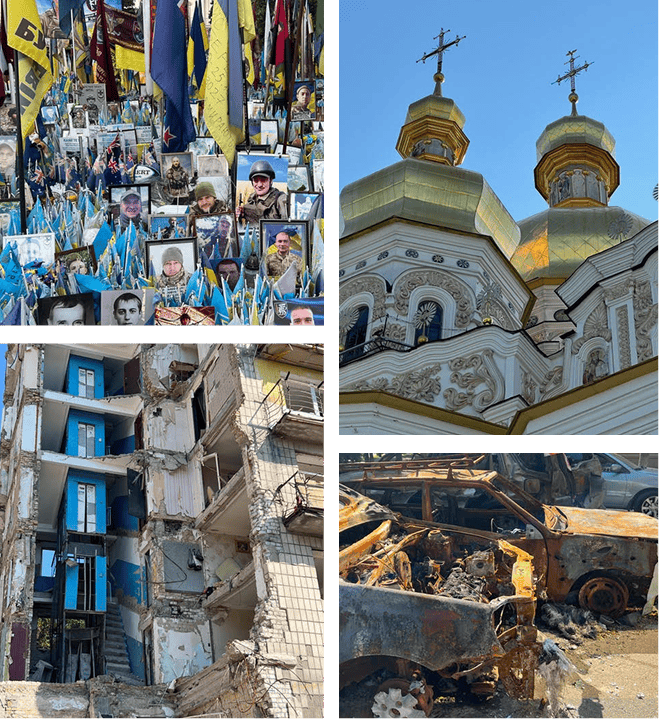
I have recently returned from two trips to Ukraine, the second taking me close to the front line. It was an extraordinary experience—one I would like to share with you. This is not the story you will read in the papers or watch on the news, but I hope it will move and inspire you.
As we enter a new year, it is increasingly evident that the world order is breaking down and reshaping itself in ways that, until recently, few of us anticipated. “Man is his own greatest danger,” Jung warned, pointing to the very real threat of mass psychosis and the profound suffering it can inflict on millions.
Writing of the “metamorphosis of the gods,” Jung described a moment of decisive transformation: one that may lead to a significant increase in consciousness—or to catastrophe. Near the end of his life, he reflected, “So much is at stake and so much depends on the psychological constitution of modern man.” But, he questioned: “Does the individual know that he [they are] makeweight that tips the scales?”—that each of us “is the infinitesimal unit on whom the whole world depends?”
I was standing at a bus station, talking with undercover explosives operatives, when suddenly I understood what Jung meant—and how it works on the ground. Hope for the future, albeit precarious, returned.
As we approach the fourth anniversary of Russia’s full-scale invasion of Ukraine, our colleagues there are keen that those who have visited bear witness—not only to the suffering, but also to the resilience, creativity, and enduring beauty of life in Ukraine.
BJAA invites you to let me tell you a story, to show your support for our colleagues, and to join us in reflecting on Jung’s enduring question: whether it is indeed the individual who is the makeweight—on whom the fate of the world depends.
Saturday 24 January from 12:00 noon EET to 15:00 EET
BodyDreaming™️ Introductory Seminar for Ukrainians
Online with simulateous translation into Ukrainian
The seminar will include:
a lecture by Marian Dunlea,
an overview of the theoretical foundations of the method,
a live demonstration of practical work by Marian with seminar participants.
For more information contact Svitlana Shevchenko: svitlanashevchenko777@gmail.com
Our body is a remarkable system that carries within it an imprint of the Universe.
We live in and through the body, and therefore it is impossible to imagine any psychic activity detached from bodily experience. The body carries the imprints of our trauma, stress, and tension. Experiences of war or forced migration also affect the functioning of our organism.
The nervous system activates survival mechanisms in order to allow us to endure a night of shelling or the pervasive uncertainty of the future. Such adaptation requires resources which, unfortunately, are finite.
How can we restore our inner resources?
How can we help psyche and body come into alignment so that we may pass through times of trial with the least possible loss?
We invite you to become acquainted with a unique trauma-work method developed at the intersection of depth psychology and body-oriented therapy.
This is an embodied psychotherapeutic practice that simultaneously grounds psychotherapy and brings soul into somatic work.
The author of the method is Marian Dunlea — an Irish Jungian analyst who trained and collaborated with Marion Woodman in the long-term project BodySoul Rhythms®️, completed professional training in Somatic Experiencing®️ trauma therapy developed by Peter Levine, and grounds her work in contemporary research in neuroscience, attachment theory, and developmental theory.
The method is oriented toward working with trauma through bodily experience and enables participants to learn the fundamentals of autonomic nervous system regulation, which bears the primary impact during today’s shock-based traumatic experiences associated with war, loss of home, loss of loved ones, prolonged stress, and cascades of traumatic events.
The course has been specifically adapted for Ukrainians living under conditions of war or for those who have left Ukraine and are facing the challenges of adaptation in a new country.
Our work is grounded in Jung’s concept of the Self as an inner centre rooted in the body, enabling both psychic and somatic self-regulation. The inner world of the soul, dreams, and images resonates in our cells, tissues, and organs, in the muscles and bones of our body.
By learning to titrate emotional overload, we deepen our sense of embodied grounding within ourselves and our environment. The capacity to regulate one’s own system is key both for processing personal trauma and for working with the traumatic experiences of clients.
This approach can serve as a complementary tool or as a stand-alone method for:
psychologists, psychotherapists, social workers, healthcare professionals, educators
—in short, all helping-profession specialists who work with the human nervous system.
It is suitable for both adults and children.
It is also used as a tool for self-help and nervous system regulation, and has proven effective for people in creative professions, supporting the release of creative blocks.
Sunday, January 25, 2026
C.G. Jung Club of Orange County
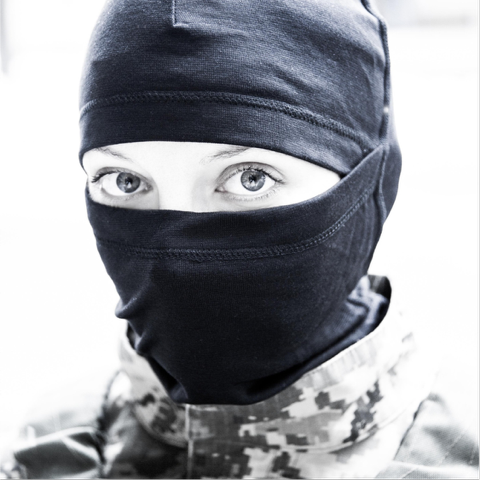
Ukrainian Women & War: A Jungian Perspective
Presented by: Svitlana Shevchenko, MA, Diplomate Jungian Analyst
War is a tremendous and tragic experience. It is naturally easy to associate it with the world of men. But the trends in today’s military show that more and more women are joining its ranks, especially when it becomes necessary to defend their homeland and their children.
Jung wrote that the unconscious, as a set of archetypes, is the sediment of all that has been experienced by mankind down to its darkest beginnings. He viewed it as a living system of reactions and dispositions, which invisibly, and therefore more effectively, determines our individual lives.
War, as an archetypal event, activates many archetypes within us, which are filled with experiences of previous generations. The main one is the Warrior archetype and it has two aspects or components – the Invader and the Defender. The Defender aspect seems to be more natural for and actualized in women. We will examine the archetypes of the Cossack woman (Amazonas), the Molfarka (female mage), and Sophia (wisdom) as they appear among contemporary women warriors.
Svitlana Shevchenko, MA, holds a master’s degree in psychology and is a Jungian analyst, a supervisor, a medical psychologist, and a member of the International Association for Analytical Psychology (IAAP) and the Ukrainian Association for Analytical Psychology (UAAP). She has been working with adults, children, support groups and dream groups for over 20 years. She is especially interested in dream interpretation, the alchemy of transformation, myths, and shadow work, and she conducts training seminars on these and other important Jungian topics. Currently, as President of the Ukrainian Association for Analytical Psychology, she is especially focused on the creation of a new official Jungian training for Ukrainians.
Ongoing
Supervision Group
The group is currently full.
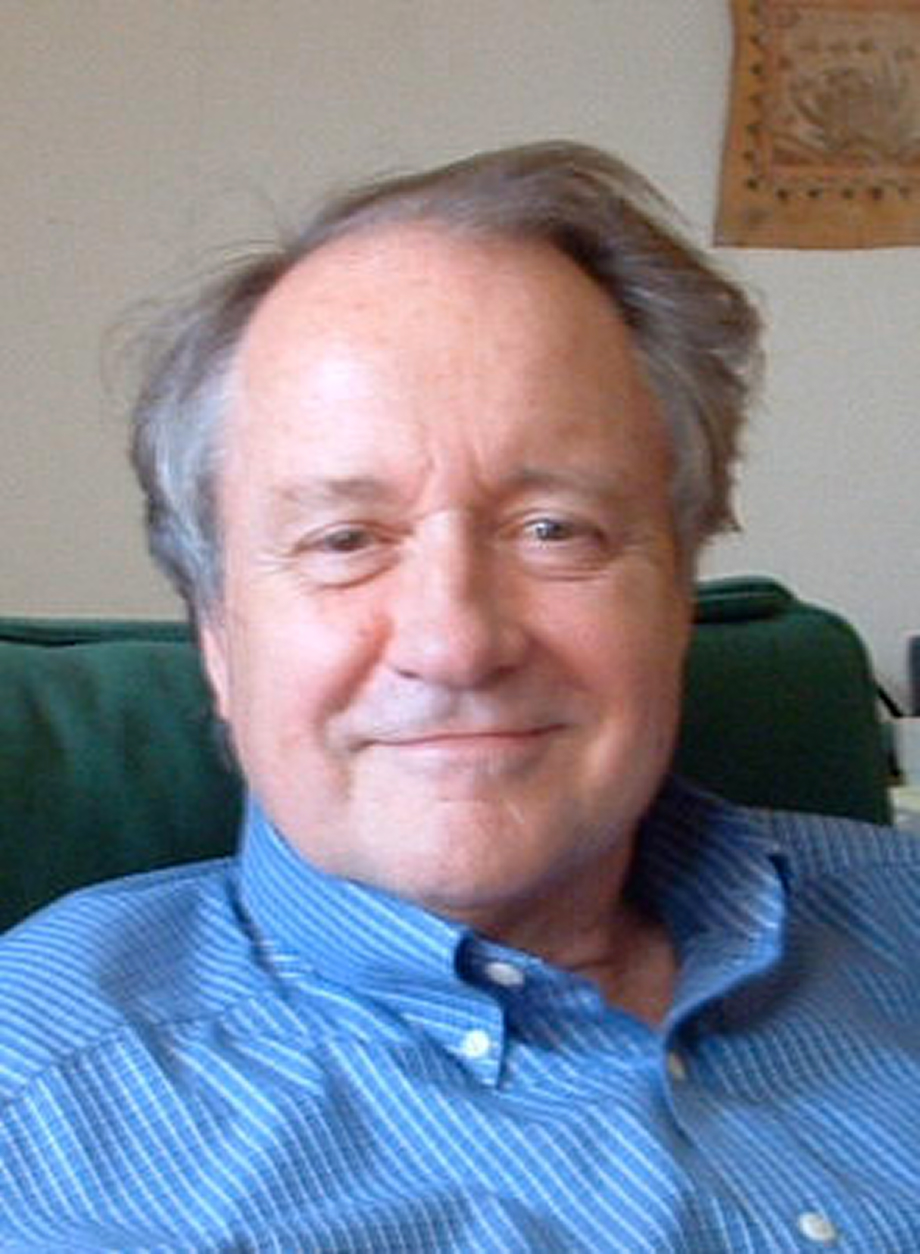
Facilitator: Donald Kalsched
Don Kalsched, one of the world’s most well-known Jungian Analysts following publication of his two books: The Inner World of Trauma and Trauma and the Soul, has been meeting fortnightly on Zoom with a group Ukrainian colleagues.
The original purpose of the groups was for Don to “supervise the supervisors.” Each participant had their own supervisee and was learning the craft of supervision in hopes that this expertise would contribute to eventual Jungian supervision training in Ukraine. More recently participants have been also presenting their own challenging analytic cases.
Don writes: “In addition to teaching about trauma and dissociation, my role in the group has been simply to hold a space for the sharing of participants’ feelings and experiences as they do “trauma therapy in a trauma vortex.” My experience of the group is that participants are doing deep and heroic work–often under very trying circumstances. Being able to share their feelings in a safe and compassionate space, while bombs are falling on their communities, has been a very moving thing for me to witness and participate in. I continue to be grateful for this opportunity.”
If you are a Jungian Analyst and are willing to offer supervision or any other form of professional support, please email Catherine Cox at wuj@citypsychotherapy.org
19th -21st June 2026
18th June: Pre-Conference Workshops
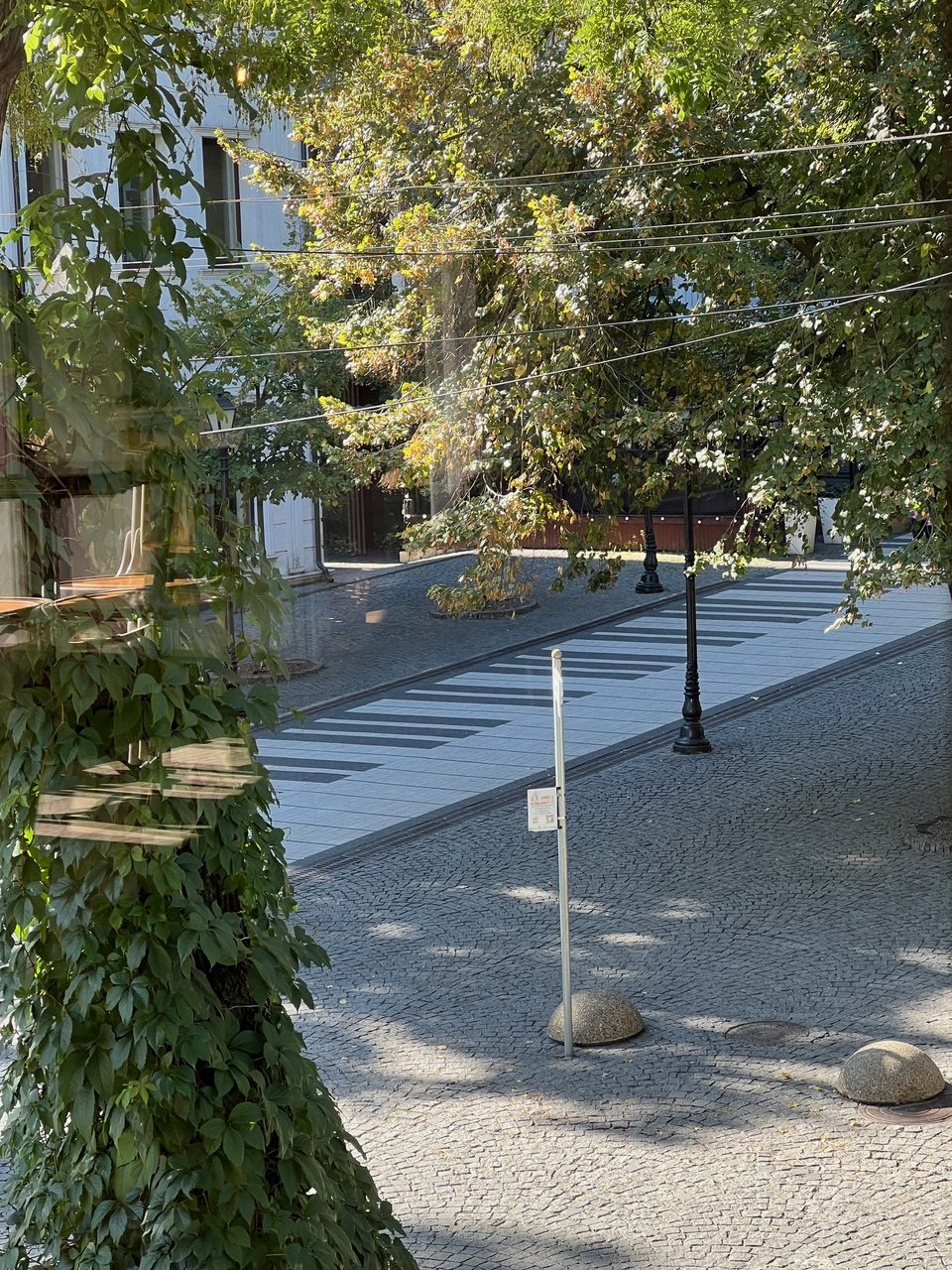
1st Conference of the new Moldovan Jungian Association
Identity at the Crossroads: Peril and Potential (provisional title)
Open to anyone interested in Analytical Psychology
Conference language: English
Do something different this year! We invite you to join us at this pioneering conference and to meet and support our Moldovan and Ukrainian colleagues.
Speakers: Catherine Cox, Natalia Caunova, Vladislav Cunets Eva Pattis, Svitlana Shevchenko, Lavinia Tanculescu, Tatyana Uzhakova, Ursula Wirtz, Luigi Zoja
For more information contact: topal2anna@gmail.com
September 2026
BodyDreaming 2-year training
For more information contact Svitlana Shevchenko: svitlanashevchenko777@gmail.com
Date to be confirmed
A Jungian Analyst’s Dispatch from near the frontline in Ukraine.
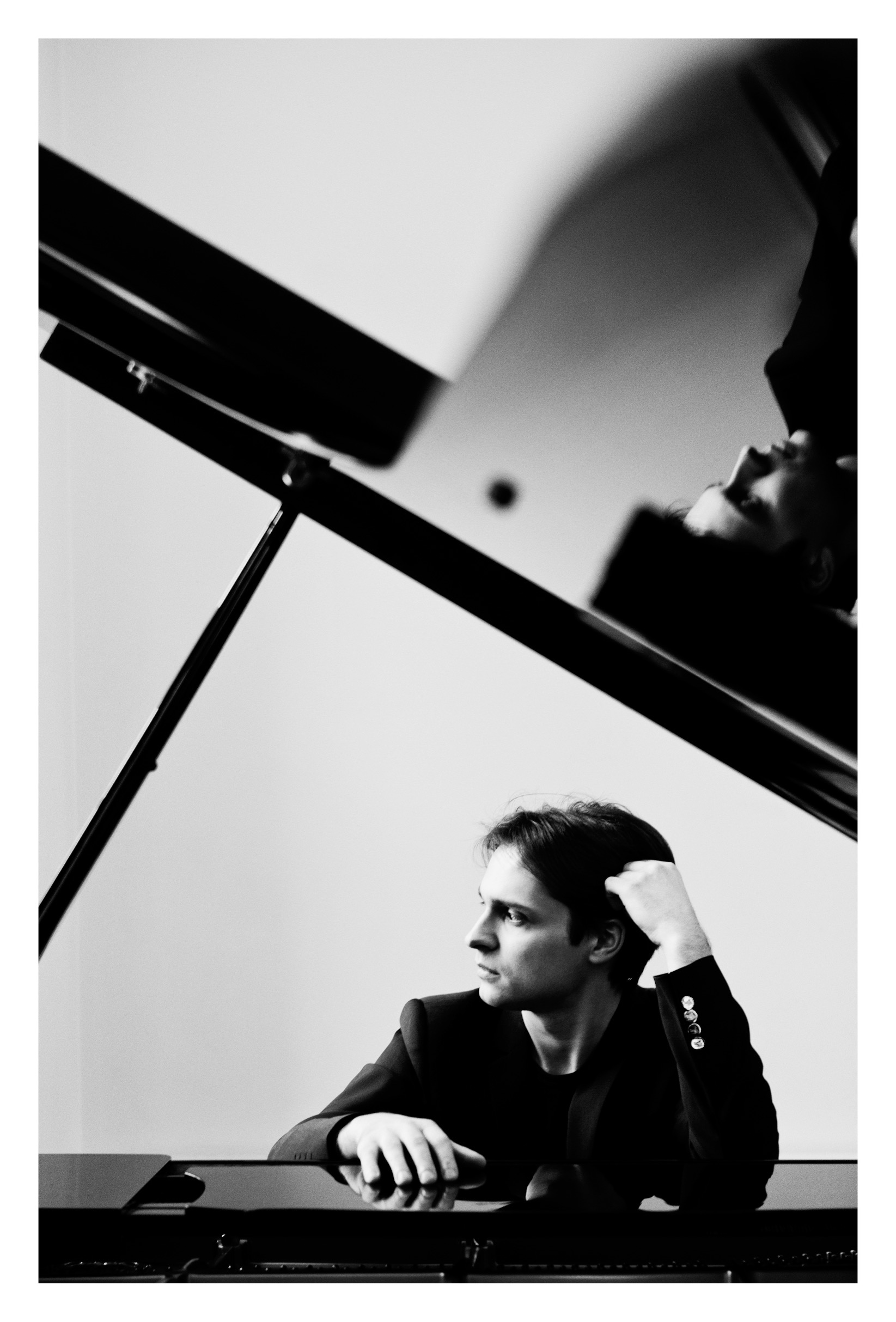
With a Performance by critically-acclaimed Concert Pianist Sasha Grynyuk
Jungian psychoanalyst Catherine Cox reports from two recent journeys to Ukraine: the first to Kyiv, and the second to Odessa, Mykolaiv, Zaporizhzhia, and Lviv. Hers is a vivid account of resilience, courage, fortitude, and hope in the face of overwhelming force, of evil, betrayal, tyranny, and terror. Catherine will speak of daily life under missile attack, the struggle to preserve Ukraine’s cultural and historical artefacts, the legacy of the Cossacks, and the profound reasons why Ukrainians are sacrificing their lives for their country.
Ukrainian pianists, of which the country has a strong tradition, have emerged as powerful cultural agents of resistance, transforming performance into acts of witness, solidarity, and defiance. Through concerts in bomb shelters, ruined concert halls, and on major international stages, they assert the continuity of Ukrainian culture in the face of attempted erasure. These musicians counter propaganda with lived truth—reminding audiences that resistance is not only military, but moral, imaginative, and deeply human.
We are privileged to welcome award-winning and critically acclaimed pianist Sasha Grynyuk, who will perform in the second half of the evening on the Club’s piano.
On 20 February 2022 my supervisee in Kyiv messaged me to let me know that Russian troops were amassed on the border and looked set to invade Ukraine. He described his fear, exhaustion, the not knowing what to do. (What do you do in such a situation, especially when you already know the brutality and oppression that invasion would bring?)
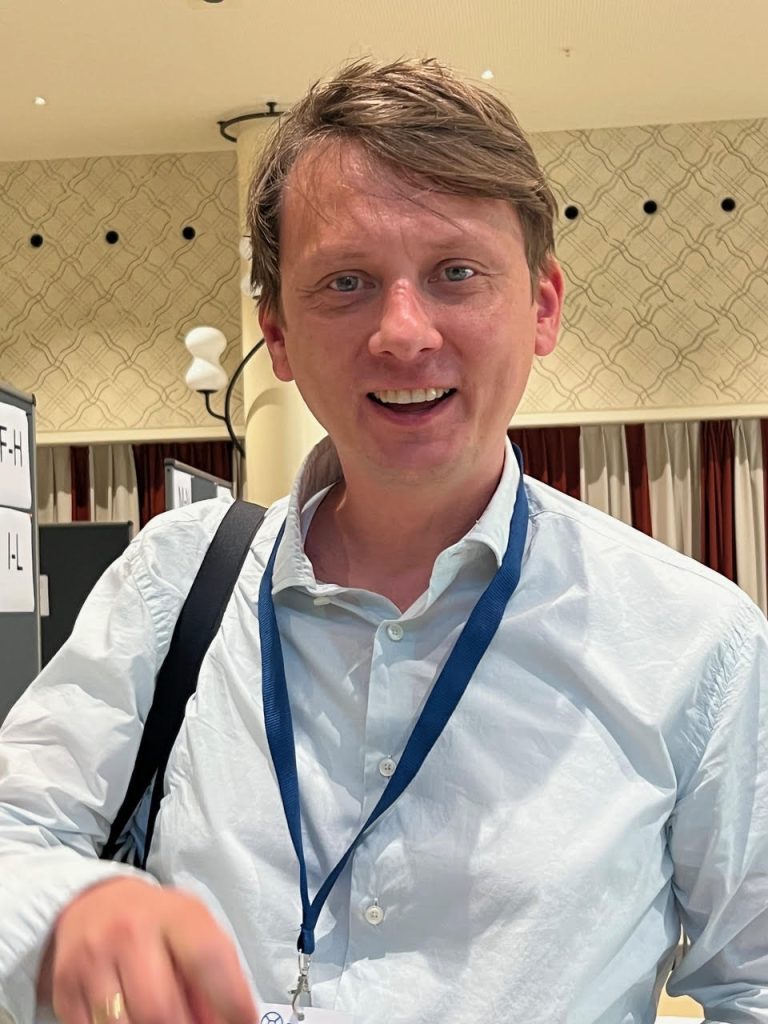 You can read Vlad’s account of those first few days here. For me, his flight from Kyiv with his wife and child filled me with anxiety. There was no food in the shops, no fuel at the petrol stations, no money in the ATMs; it was minus 10 and the Russians were bombing the cars of civilians fleeing. I was terrified for him.
I asked Maxim Ilyashenko, a Ukrainian therapist in London, what we could do to help – but the situation was developing so rapidly, people were fleeing, it was difficult to work out what was needed.
But one thing I was clear about, was that Putin was not going to make me a bystander. In my view, the worst thing you can do in a traumatic situation is nothing. It is very important that those being traumatised can see that people are actively trying to help. It is also important that perpetrators are met with as much resistance as possible.
And so #WithUkrainianJungians (WUJ) came into being. In fact, originally it was called For Ukrainian Jungians – but we quickly learnt that this would very much be a project of mutual benefit. The experiences of our colleagues drew out a maturity, depth, strength and resilience that has been an inspiration to us all.
We needed to keep the project manageable and so decided to focus on supporting our colleagues, Jungian analysts and therapists in Ukraine. By supporting them, we hoped to enable them to continue to work, thereby helping others in desperate need.
As it happens, other Ukrainians have also wanted to participate – all are welcome.
WUJ’s strap-line is “Walking alongside our Ukrainian colleagues and all those facing erasure”. Colleagues from other parts of the world started to share with us their fears of erasure – Palestine, Taiwan, Israel. And so we have tried, with our limited resources, to support other colleagues also.
War between Israel and Palestine
The war between Israel and Palestine following the massacre by Hamas on 7th Oct 2023 led to a second webinar by Ann Ulanov in which we expressed support for colleagues caught up in the conflict.
You can
- view the recording here [https://aras.org/wuj] (Please scroll down the page to webinar 11)
- read Ann Ulanov’s paper Speaking to the Unspeakable
- read Catherine Cox’s introduction here
IAAP Congress in Zurich
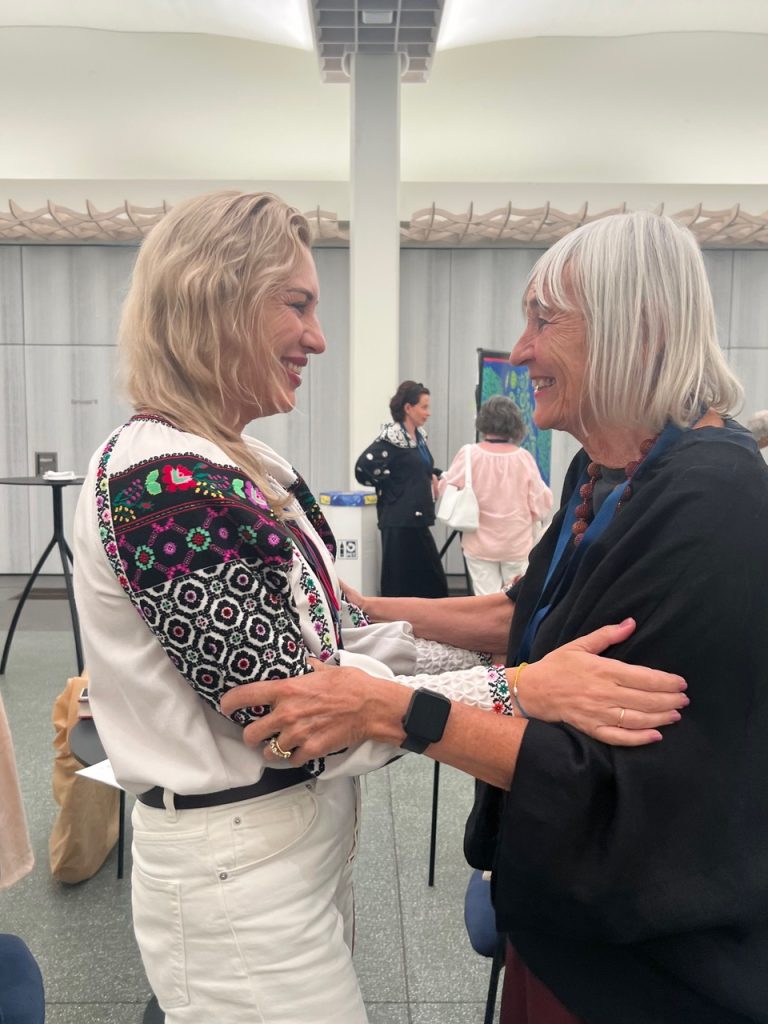
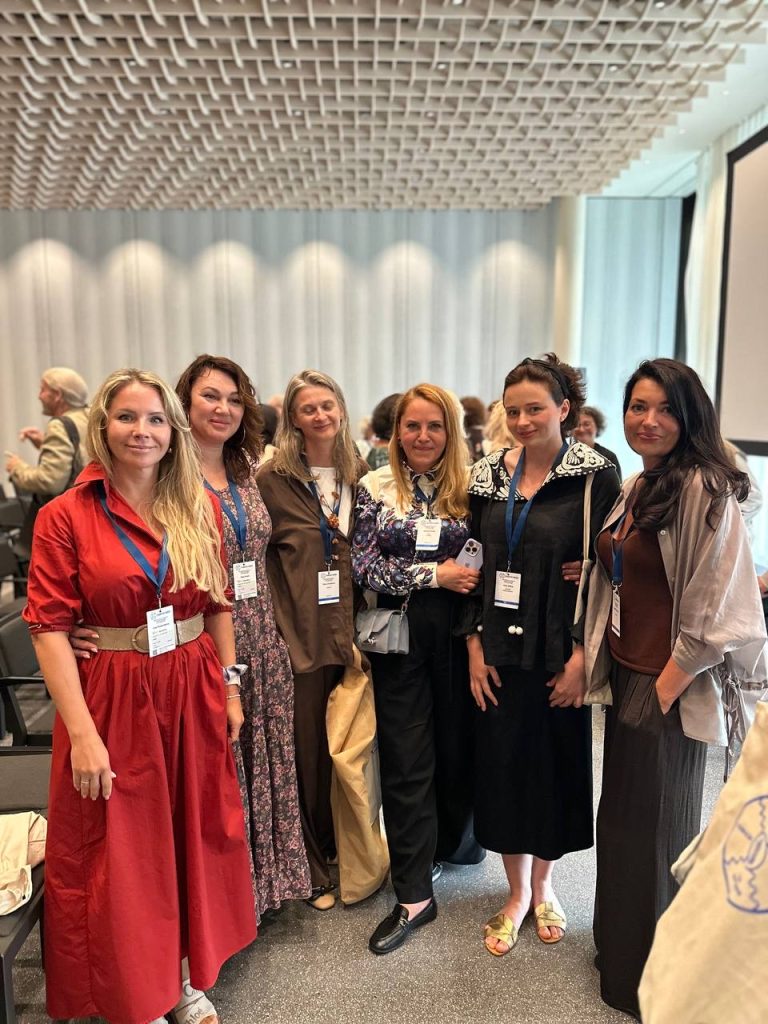
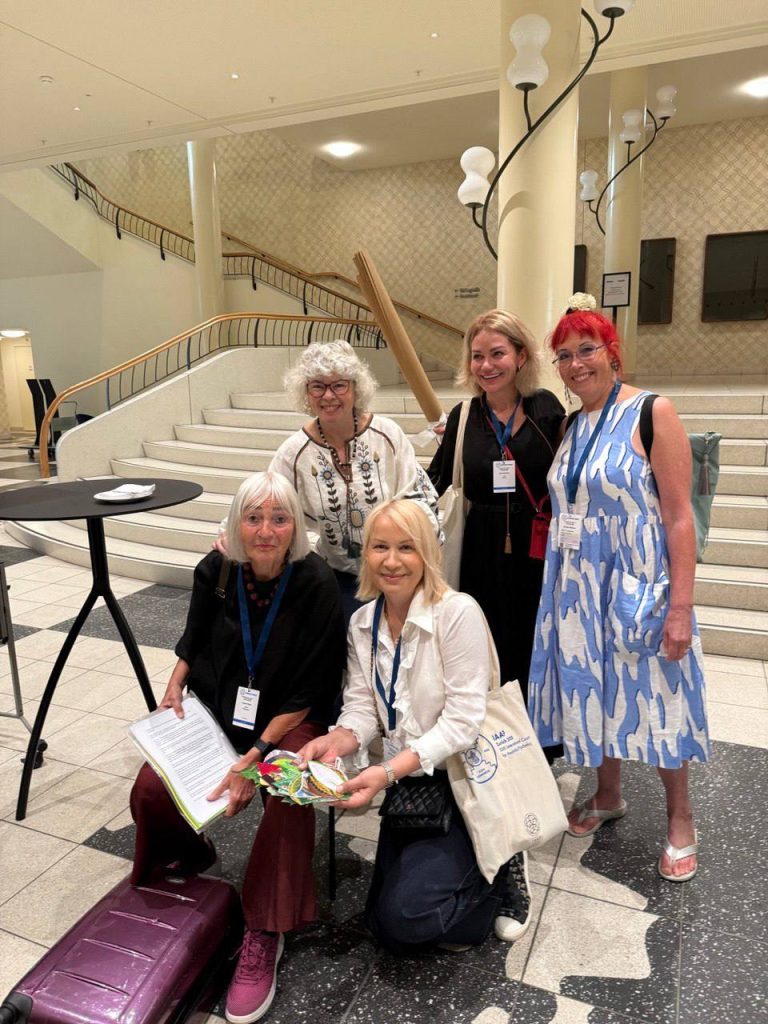
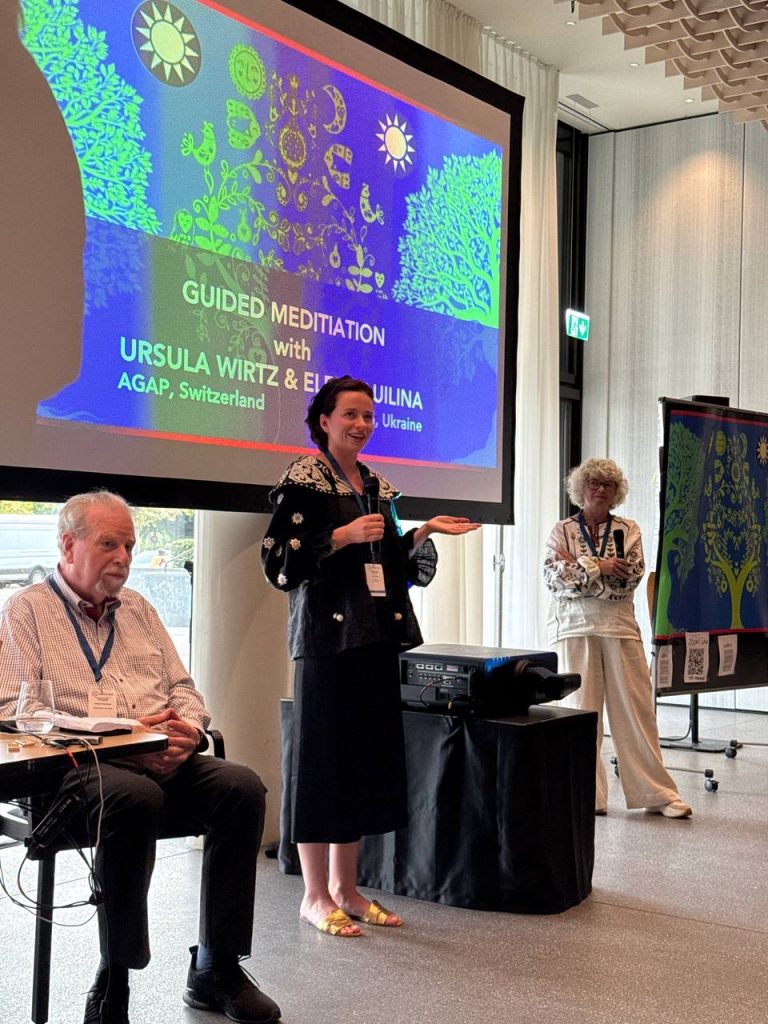
At the Congress of the IAAP (International Association for Analytical Psychology) in Zurich in August 2025 WUJ called for an end to the genocide in Gaza. This was a controversial call, with some analysts disagreeing that what we were witnessing in Gaza could be called genocide.
Within WUJ we felt it was necessary to name what was taking place as the world looked on, for to call it something else would be to be complicit in denying its reality. It was challenging for all that the Congress (they take place every three years) was happening at such a time and to know how best to respond, but our feeling was that we could not not respond. We did not want history to look back at a world congress of Jungian Analysts taking place in full view of events in Gaza and think we were silent.
WUJ exists, insofar as its resources allow, to support colleagues irrespective of nationality as they grapple with the immensely complex and distressing situations in which they find themselves and seek ever expanding consciousness and transformation – in alchemical terms (as Jungians are won’t to use), as we all work in the nigredo, suffer mortificatio and seek the philosophers’ stone (or lapis).
The Aims of WUJ

To alleviate trauma
by standing alongside and being present – thereby also mitigating the long term and inter-generational effect of trauma.
To support traumatised colleagues
so they may continue to serve their clients, supervise other mental health practitioners, run projects in their communities, train therapists for the future, and develop their skills and practice for the benefit of colleagues and the wider community in war zones both now and in the future.
To use the resources of Analytical (Jungian) Psychology
to increase consciousness within the Jungian world and beyond, and to sustain the wider community in these tumultuous times.
To speak with courage
to act with humility, to listen and strive for understanding and to offer ourselves generously where we are needed.
To hold the tension where there is polarisation
in the spirit of reconciliation and integration.
To stand with colleagues elsewhere in the world who are threatened with erasure.
To support colleagues who are refugees
acknowledging the psychological impact of forced displacement, disruption of professional continuity, rupture of relatedness unspoken emotional burden, and survivor’s guilt.
International Webinar Series
Free to view!
WUJ ran a series of 16 webinars, featuring some of the most well-known Jungian analysts and academics from the around the world.
Each Analyst was paired with a Ukrainian analyst or analytical therapist, offering colleagues in Ukraine the opportunity to work with an eminent colleague. These partnerships were greatly valued for also offering emotional and professional support.
We were astounded at the depth of work that our colleagues in Ukraine were able to produce whilst under bombardment, fearful always for immediate family members on the frontline and whilst continuing with their clinical practice and training responsibilities.
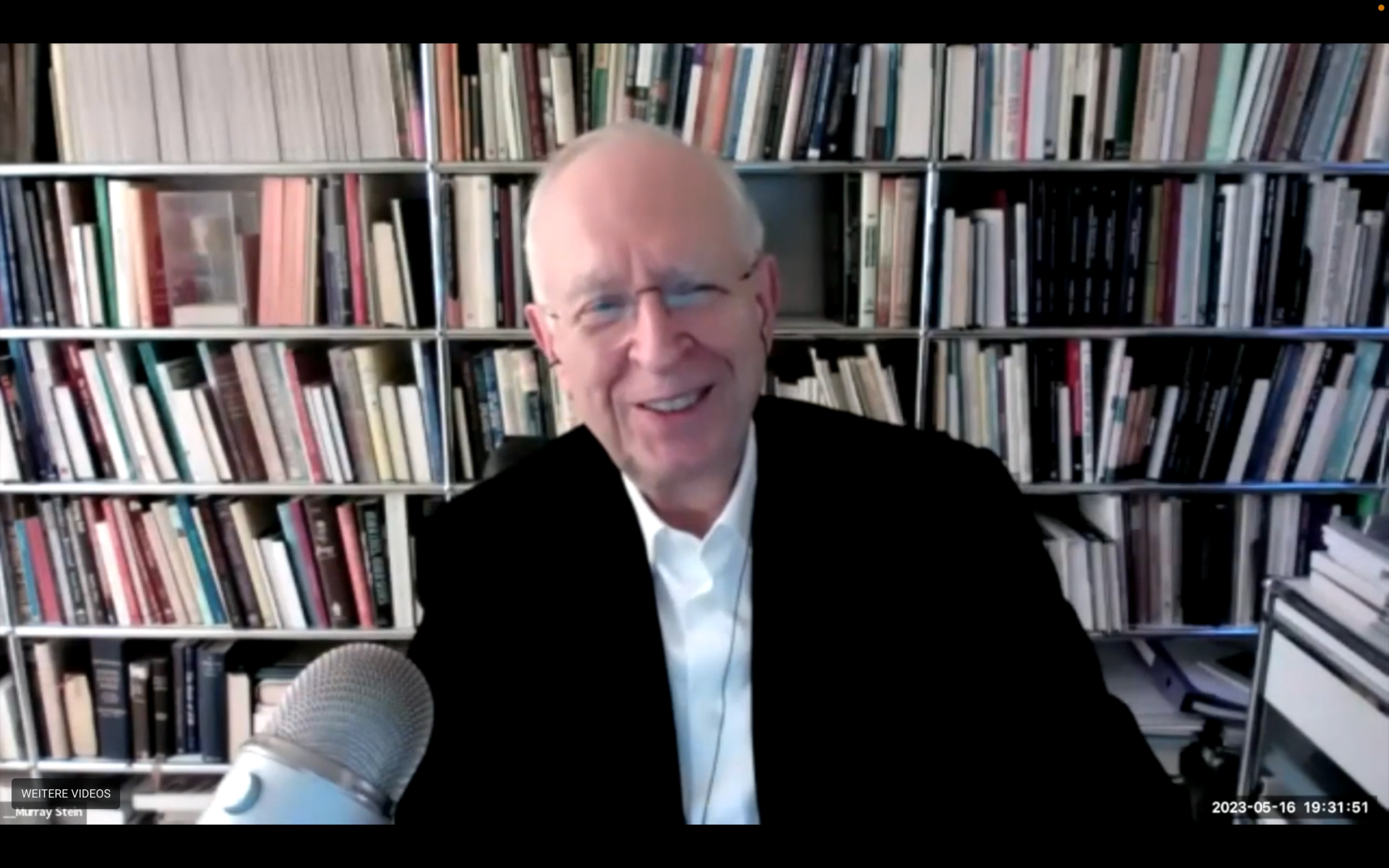
Murray Stein – Webinar 5: Answer to Evil – A Dream for Our Time
We are grateful to ARAS (The Archive of Research in Archetypal Symbolism) in New York for hosting the recordings of these webinars on its website.
The webinars – many of which were interpreted live into several languages (Ukrainian, Chinese, Italian, Spanish, Portuguese and German) – are available free to view here.
List of webinars:
- Synchronicity and Trauma:
Joe Cambray & Inna Kyryliuk
Chair: Catherine Cox (UK) - Jung’s New Cure of Souls: Reflections on Jung’s practice and later shifts in Analytical Psychology:
Sonu Shamdasani & Svitlana Shevchenko
Chair: Diane Finiello Zervas (UK) - BodyDreaming – aligning with the body and psyche’s inherent organic capacity for Self-regulation:
Marian Dunlea & Olena Brante
Chair: Catherine Hinds (UK) - Jung’s notion of the Self: An emerging new God-image:
Lionel Corbett & Olena Pozdieieva
Chair: Alessandra di Montezemolo (France) - Answer to Evil – A Dream for Our Time:
Murray Stein & Serhiy Teklyuk, with Diane Stanley
Chair: Sally Arthur (UK) - The Effect of Absent Fathers: Father Desire, Father Wounds:
Susan Schwartz & Elena Liulina
Chair: Stephen Bushell - Perseus: Myth for our times:
Ann Shearer & Victoria Roslik
Chair: Sally Arthur (UK) - Inner and Outer Democracy and the threat of Authoritarianism: Reflections on Psychological Factors at Play in our Polarised World:
Donald Kalsched with Dmitro Zaleskyi, Oxana Zaleska & Olena Brante
Chair: Lisa Marchiano (USA) - Coping with Grief – Difficulties and Resources:
Verena Kast & Olga Kasianenko
Chair: Lily Rose Nomfundo Mlisa (South Africa)
- Collective Forms of Severe Adversity: narratives, traps, effects and therapeutic endeavours:
Renos Papadopoulos & Larysa Kosyr
Chair: Karin Fleischer (Argentina) - Speaking to the Unspeakable: Reflections on Jung’s work and on The Red Book and The Black Books with IAAP President Misser Berg and Catherine Cox:
Ann Ulanov - The Mythopoetic Imagination and the Collective Unconscious in Uncertain and Dystopian Times:
Tom Singer & Daria Kunchenko
Chair: Pi-Chen Hsu (Taiwan) - Love Inside-Out: Jung’s Black Books as a framework for shaping one’s attitude towards life, war and analysis:
Katerina Sarafidou & Yurij Danko
Chair: Heyong Shen (China) - Presence, Manifestation and Proclamation of the Symbol in Analysis:
George Hogenson
Chair: Jörg Rasche (Germany) - The Wisdom of the Arts in Transforming Trauma:
Ursula Wirtz & Victoria Demchenko
Chair: Eva Pattis (Italy) - Journeying within: Partaking in Communitas with the #WUJ:
Murray Stein & Ursula Wirtz
There was widespread call for Reading Groups to study Ann Ulanov’s paper in more depth and so WUJ set up 9 Reading Groups, each facilitated by two Jungian Analysts (or suitably qualified other) with experience in the study of C G Jung’s Red Book.
Each group met 3 times, with simulates translation.
The groups met just as Russia started bombing Ukraine’s energy infrastructure. Who can forget meeting colleagues who are wrapped in blankets, illuminating the dark with a candle, with the occasional soldier passing through?
In one group there was a colleague who was with her young daughter when they heard the distinctive sound of a missile approaching. “Are we going to die, Mummy?” the child asked. The missile hit the property next door killing its inhabitants. Our colleague was clearly in a state of shock and was non-responsive throughout. The following meeting we asked her if we should have handled her situation differently, but in fact just being there with us was what she needed.
Ann Ulanov’s paper was divided into three sections:
- Individuation Process
- Personal and Collective
- A note from the feminine
You can read the English version here [insert link] and the Ukrainian [here]
The Reading Groups were facilitated by:
Stella von Boch
Joe Cambray
Linda Carter
Catherine Cox
Judy Cowell
Catherine Hinds
Maxim Ilyashenko
Trevor Jameson
Olga Kasianenko
Inna Kyryliuk
Alessandra di Montezemolo
Elisabetta Passini
Elena Pozdieieva
Katerina Sarafidou
Susan Schwartz
Guislaine Vincent Morland
Serhiy Teklyuk
Caterina Vezzoli
Heba Zaphiriou-Zarfi
Ann Ulanov Foundational Paper
created by our Ukrainian colleagues
Eminent New York Analyst Ann Ulanov was the keynote speaker at our first event, with a seminal paper entitled “Making the Unsayable Experiential”, a quotation from C G Jung’s Black Book (BB7 p191).
The paper was so rich it was not possible fully to digest it in one hearing, and so, in response to many requests, WUJ arranged Reading Groups to study the text more closely. You can read about these and download copies of Ann Ulanov’s paper below.
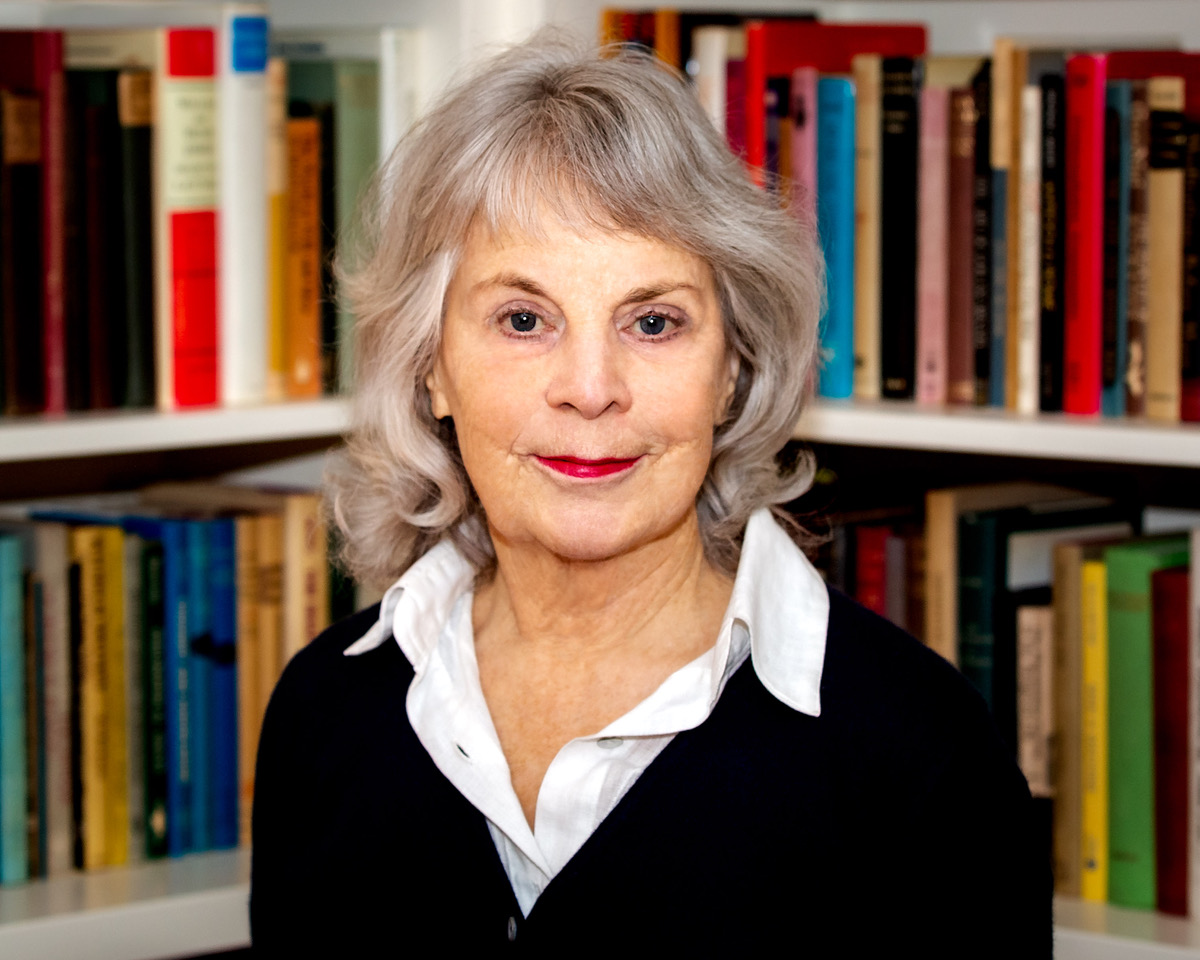
You may view the webinar free of charge here. Ann Ulanov’s paper starts at 56’48”
Making the Unsayable Experiential #2 →
UKR Making the Unsayable Experiential →
Also on this recording you may view the responses of several Jungian analysts and academics to the invasion: Joseph Cambray, Donald Kalsched, Sonu Shamdasani, Murray Stein, Verena Kast, Lionel Corbett, Ursula Wirtz, Renos Papadopoulos, Tom Singer, Marian Dunlea, Susan Schwartz, George Hogenson, Lisa Marchiano, Dale Mathers, & Christopher Hauke
These are followed by addresses by:
- Inna Kyryliuk, President of the Ukrainian Jungian Association (UJA)
- Dmytro Zelesky, Ukrainian Society of Analytical Psychology (USAP) “Symbols of the War and Resilience: Cultural Context”
Miniature films
created by our Ukrainian colleagues
hRather than have everyone sit in silence whilst waiting for our webinars to start, our Ukrainian colleagues created beautiful welcome videos of 5 -10 minutes in length to move, inspire and entertain us.
In these mini films our colleagues share with us traditional and contemporary Ukrainian music, Ukrainian mythology, Ukrainian art (some from the war and some traditional).
The films are available free to view on the WUJ page on the ARAS website: click here to view and scroll down.
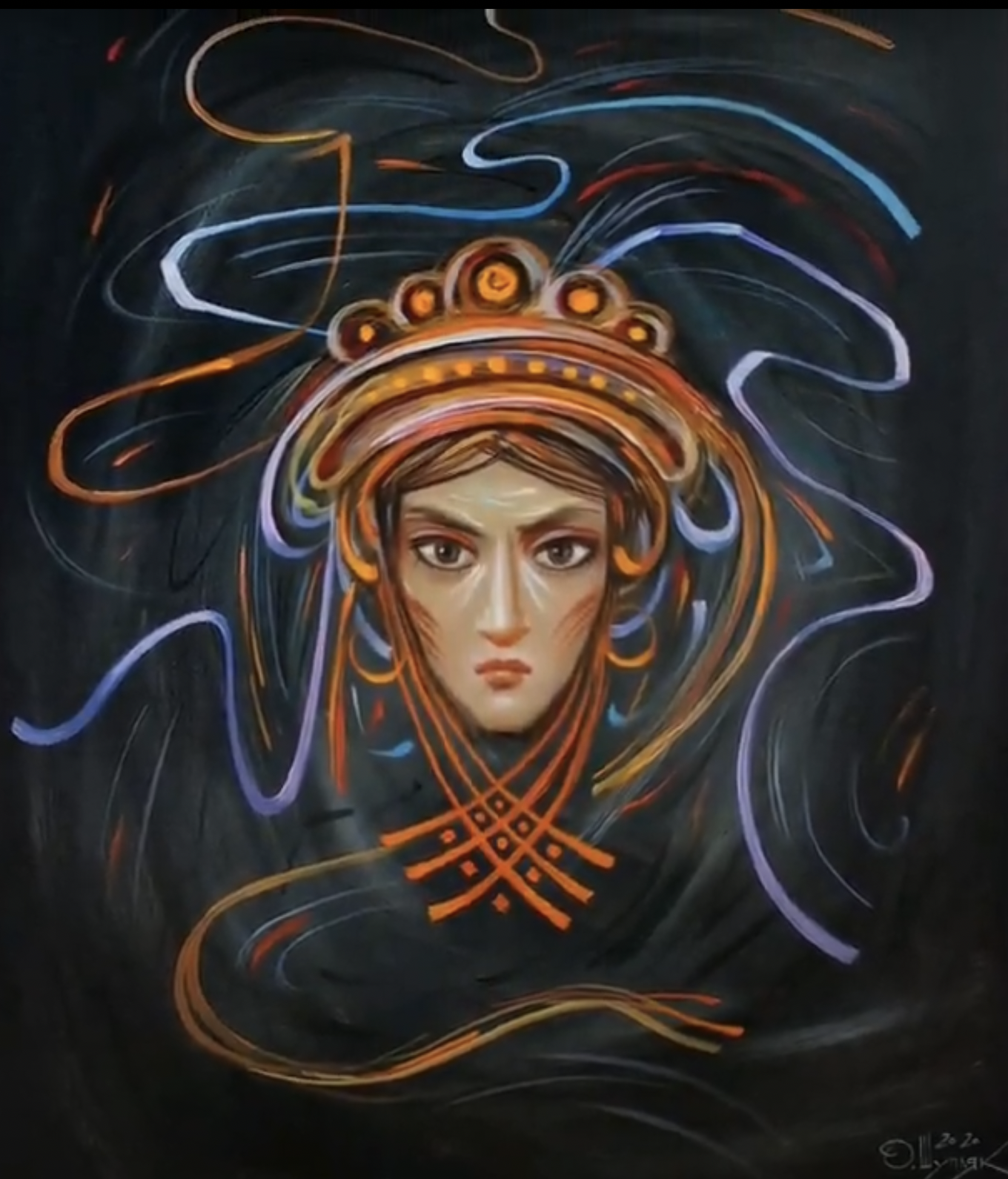
The WUJ Team
Catherine Cox (Director)
Joe Cambray
Marian Dunlea
Catherine Hinds
Donald Kalsched
Daria Kunchenko
Olga Kasianenko
Inna Kyryluk
Marilyn Mathew
Elisabetta Pasini
Victoria Roslik
Svitlana Shevchenko
Susan Schwartz
Tom Singer
Serhiy Teylyuk
Ann Ulanov
Ursula Wirtz

Ursula Wirtz, Ph.D.
Your title or notable accomplishment here.
Ursula holds a doctorate in literature and philosophy, with a multifaceted expertise, being a clinical and anthropological psychologist as well as a Jungian psychoanalyst.
She has been internationally engaged in the training of Jungian analysts in Russia, Czech Republic, the Baltic States, China, and Taiwan. As a psychotraumatologist , serving for 20 years as a board member of a Swiss Foundation for War Trauma Therapy, she has been actively involved in global efforts focused on peace and reconciliation. Her experiences extended to providing supervision for war and torture victims through the Red Cross and guiding therapists in their work with female survivors of mass rapes in former Yugoslavia.
Ursula has contributed significantly to the field, with numerous publications covering diverse areas such as trauma, ethics, soul murder, and the convergence of psychotherapy and spirituality. Among her seminal works, “Trauma and Beyond: The Mystery of Transformation” stands as a testament to her expertise, having been translated into multiple languages including German, Russian, Polish, Czech, and Chinese. Moreover, her impact extends to the translation of two other books, “Soulmurder: Incest and Therapy” and “Hunger for Meaning” (Wirtz/Zöbeli) into Ukrainian.
At WUJ’s inaugural event we started with an international Social Dreaming Matrix. As we were a very large group, we then split into 6 groups for the matrices themselves. Were we one matrix or six matrices, we wondered. As far as we know this had not been attempted before. We then reconvened as a group to share what was experienced.
Conducting Social Dreaming Matrices in war situations is a complex undertaking and the matrices were unlike any that most of us had previously experienced, but some months later there was a call from Ukraine for more Social Dreaming Matrices to be organised.
Social Dreaming is based on the assumption that we dream not just for ourselves, but as a part of the larger world in which we live. This idea has an ancient lineage. Long before Freud and Jung began to study them, dreams and dreaming had great significance to people in societies such as the Australian Aboriginals, Native Americans and African groups as they attempted to understand the meaning of their lives and their experiences of the world they inhabited.
The modern Social Dreaming Matrix was ‘discovered’ by W. Gordon Lawrence, an organisational consultant at the Tavistock Institute of Human Relations, and has been developed by others throughout the world.
The Social Dreaming Matrix offers a container which can receive the dreams. Those participating in the Matrix associate to and expand (amplify) the images in the dreams. There is less eye contact and so less ego involvement. We are seeking to attune to the deeper levels of the unconscious, to discover what is not known to consciousness. It can be a profound encounter with the depths. New perspectives emerge, which may bring healing and a new attitude.
The original super-matrix facilitators were:
Helen Morgan
Fiona Palmer Barnes
Catherine Cox
Franca Fubini
Carola Mathers
Marilyn A.F. Mathew
Alessandra di Montezemolo
Elisabetta Pasini
Carlos Remotti-Breton
Chris Scanlon
Laurie Slade
Cinzia Trimboli
The SDM group facilitators were:
Fiona Palmer Barnes
Elena Brante
Maggie Cochrane
Maxim Ilyashenko
Carola Mathers
Marilyn A.F. Mathew
Alessandra di Montezemolo
Elisabetta Pasini